Author: shrwanswami@gmail.com

  • 40 Commonly Asked Family Law Questions and Their Answers

    Marriage and Domestic Partnerships

    What is the difference between marriage and a domestic partnership?

    Answer: Marriage is a legal union recognized nationwide, granting federal and state rights. Domestic partnerships provide limited legal benefits and are often recognized only at the state or local level.

    Can a prenuptial agreement protect my assets?

    Answer: Yes, a prenuptial agreement can outline asset division and protect personal property in case of divorce.

    Also read:

    Is a prenuptial agreement enforceable?

    Answer: It is enforceable if it is made voluntarily, with full disclosure of finances and fair terms, and does not violate public policy.

    Can a spouse change his or her name after marriage or divorce?

    Answer: Yes, a spouse can lawfully change his or her name after marriage or divorce by including the request in the divorce decree or by filing an appropriate petition in court.

    Divorce and Separation

    What is the difference between legal separation and divorce?

    Answer: Legal separation allows spouses to live apart and resolve issues like custody and support without ending the marriage. Divorce legally dissolves the marriage.

    What is a no-fault divorce?

    Answer: A no-fault divorce allows a spouse to file without proving wrongdoing, citing irreconcilable differences or an irretrievable breakdown of the marriage.

    How long does a divorce take?

    Answer: The length of time depends on the complexity, but no-contest divorces can take as little as a few months, while contests can take more than a year or two.

    Can my spouse stop the divorce process?

    Answer: In a no-fault jurisdiction, one spouse cannot stop a divorce if the other spouse wishes to proceed.

    Child Custody and Support

    How is child custody determined?

    The custody is determined on the best interest of the child, factors include the relationship between the child and parent and stability to meet the child’s needs.

    Legal Vs Physical Custody

    Legal Custody of a child is about deciding the child’s rearing, while the physical custody decides with whom the child will reside.

    Can Custody Orders Be Modified?

    Answer: Yes, custody orders can be modified if there is a significant change in circumstances affecting the child’s well-being.

    What happens if a parent violates custody orders?

    Answer: The violating parent may face penalties like contempt of court, fines, or custody modifications.

    How is child support calculated?

    Answer: Child support is typically calculated using state guidelines, considering both parents’ incomes, custody arrangements, and the child’s needs.

    What happens if child support is not paid?

    Answer: Enforcement actions include wage garnishment, license suspension, tax refund interception, and potential jail time.

    Can a non-custodial parent refuse to pay child support if visitation is denied?

    Answer: No, child support and visitation rights are separate issues, and withholding support can result in legal penalties.

    Spousal Support (Alimony)

    What factors determine spousal support?

    Factors include the duration of the marriage, both spouses’ incomes and earning abilities, and living standards during the marriage.

    Is spousal support modifiable?

    Answer: Yes, it is, in case of a significant change in circumstances such as job loss or remarriage.

    Does spousal support automatically terminate if the recipient gets remarried?

    Answer: Spousal support generally terminates at the time the recipient gets remarried.

    Division of Property

    What is marital and separate property?

    Answer: Marital property is acquired during the marriage and subject to division, while separate property is owned before marriage or received as a gift or inheritance.

    How is property divided in divorce?

    Answer: Property is divided equitably in most states, though some states follow community property laws requiring a 50/50 split.

    What happens to the family home during divorce?

    Answer: The court may order the house sold and the proceeds divided or allow one spouse to retain it, compensating the other spouse.

    Are retirement accounts divided in a divorce?

    Answer: Yes, retirement accounts are typically divided through a Qualified Domestic Relations Order (QDRO) when acquired during the marriage.

    Domestic Violence

    What is a restraining order?

    Answer: A restraining order is a court order protecting a victim of domestic violence by prohibiting the abuser from contacting or getting close to them.

    How does domestic violence influence custody decisions?

    Answer: The courts consider the child’s safety above all else and may bar or limit the abusive parent from having rights of custody or visitation.

    Adoption and Guardianship

    How does adoption work?

    Answer: Adoption involves legal severance of biological parental rights and the court’s order to appoint the adoptive parent(s) as the child’s legal guardians.

    Can grandparents adopt their grandchildren?

    Answer: Yes, if the parents are considered unfit or if they agree to the adoption, grandparents can apply for adoption.

    What is legal guardianship?

    Answer: Legal guardianship gives a person the right to take care of a child when the biological parents cannot.

    Relocation and Custody

    Can I relocate to another state with my child after divorce?

    Answer: You may need court approval or the other parent’s consent if the move significantly affects custody or visitation.

    What do courts consider in relocation requests?

    Answer: Courts consider the reason for the move, the impact on the child’s relationship with the other parent, and the child’s best interests.

    Grandparent Rights

    Do grandparents have visitation rights?

    Answer: In a few states, grandparents may seek visitation provided it would be in the child’s best interests and the child has a history of contact.

    Can grandparents gain custody of a grandchild?

    Answer: Yes, when the parents are unfit or cannot care for the child, the grandparents can petition for custody.

    Miscellaneous

    What is an uncontested divorce?

    Answer: An uncontested divorce is granted when both parties agree on every major issue including property division, custody, and support.

    Do I have a right to obtain a divorce if my spouse does not?

    Answer: Yes, you can get divorced in no-fault divorce states without your spouse’s consent.

    What is family law mediation?

    Answer: Mediation is the process by which a neutral third party assists in the resolution of disputes between the parties without litigating it in court.

    What happens if one spouse conceals assets in divorce?

    The court may sanction the spouse for concealing the assets, provide a greater percentage of assets to the other spouse, or reopen the distribution of property. Can I change my child’s last name after divorce?

    Yes, but the court will determine whether changing the child’s name is in his or her best interest. Can child support be enforced across state lines?

    Answer: Yes, through the Uniform Interstate Family Support Act (UIFSA), states collaborate to enforce child support orders.

    What is parental alienation?

    Answer: Parental alienation occurs when one parent manipulates the child to turn them against the other parent. Courts may intervene to protect the child’s relationship with both parents.

    What is a parenting plan?

    Answer: A parenting plan outlines custody arrangements, visitation schedules, and decision-making responsibilities for the child.

    How does family law deal with same-sex marriage and divorce?

    Same-sex couples are accorded equal rights and obligations to opposite-sex couples, which include marriage, custody, support, and division of property.

    These answers summarize key family law issues, giving people a head start in addressing legal issues with their families.

  • 40 Tips to Protect Yourself Under Consumer Protection Law

    Know Your Rights as a Consumer

     Familiarize yourself with the laws such as the Federal Trade Commission (FTC) Act, Fair Credit Reporting Act (FCRA), and Fair Debt Collection Practices Act (FDCPA).

     Warranty Protections

     Know your express and implied warranties, including those guaranteed by the Magnuson-Moss Warranty Act to ensure product repairs, replacements, or refunds.

     Cooling-Off Periods

     Take advantage of the federally mandated cooling-off periods for cancellation of contracts, like door-to-door sales, within three days.

     Product Liability Laws

    Also read:

    Manufacturers and sellers must be held accountable for injuries that occur from their defective products.

    Assert Your Right to Refunds

    Determine store policies and state laws concerning returns and refunds on defective or misrepresented merchandise.

    Safe Shopping

    Buy from Known Retailers

    Always check a retailer’s reliability before buying online.

    Don’t Buy on Impulse

    Carefully research products and prices and compare them to make an intelligent purchasing decision.

    Save Your Receipts and Invoices

    Save receipts to return or file a claim for damaged goods.

    Inspect Goods When Received

    Inspect goods immediately to ensure they match descriptions and are in good condition.

    Beware of “Too Good to Be True” Deals

    Avoid offers that seem unrealistically low, as they may indicate scams or counterfeit goods.

    Protecting Yourself Online

    Shop on Secure Websites

    Make sure websites have secure connections (https://) and have trust seals.

    Read Terms and Conditions

    Understand cancellation policies, return procedures, and fees before buying.

    Be cautious of Phishing Scams

    Do not click on suspicious links or provide personal information through unsolicited emails.

    Use Strong Passwords

    Use strong, unique passwords to secure your online shopping accounts.

    Monitor Subscription Services

    Keep track of automatic renewals and ensure you can cancel subscriptions easily.

    Avoiding Scams

    Verify Sellers on Marketplaces

    Check reviews, ratings, and seller policies on platforms like Amazon, eBay, or Etsy.

    Report Fraudulent Offers

    Report Scams

    Report scams to the FTC or consumer protection agencies

    Using Credit Cards for Purchases

    The credit card provides fraud protection and also allows chargeback in case of disputes.

    Research Unknown Brands

    Research unknown companies before any purchase as a measure to ensure legitimacy

    Never Share Sensitive Information

    Never share Social Security numbers, bank details, or passwords; only under necessary circumstances.

    Dealing with Complaints and Disputes

    Communicate first with the Seller

    Try to resolve the complaints directly with the seller before referring the matter to the legal channels

    File a Complaint to the BBB

    Use the Better Business Bureau (BBB) to file complaints and get settlements.

    Contact Your State Attorney General

    File a complaint on consumer fraud or an unfair business practice with your state attorney general’s office.

    Use Small Claims Court

    Take your smaller disputes to court without an attorney.

    Consult a Lawyer for Advice

    See a consumer protection attorney if it involves something too complicated or too many damages.

    Guarding Your Financial Information

    Bank and Credit Statements Monitoring

    Check periodically for unauthorized charges or errors.

    Dispute Charges

    Report any billings errors or fraudulent transactions to your bank or credit card company immediately.

    Activate Fraud Alerts

    Notify the credit bureaus if you suspect identity theft or fraud

    Know Your Rights Under the Credit Reporting Act

    Get free annual credit reports and dispute errors for free under the FCRA.

    Be Careful with Payment Apps

    Only do transactions using secured and legitimate platforms such as PayPal or Venmo.

    Debt and Collections: Know Your Rights Under the FDCPA

    Understand protections against harassment and abusive practices by debt collectors.

    Request Debt Verification

    Ask for written verification of any debt before making payments.

    Negotiate Payment Plans

    Work with creditors to establish manageable repayment terms.

    Be Wary of Predatory Lending

    Avoid loans with excessive fees, unclear terms, or high-interest rates.

    Seek Help for Debt Resolution

    Use nonprofit credit counseling services to manage debts and avoid scams.

    Staying Informed

    Follow Consumer Alerts

    Stay updated on scams and fraudulent practices through FTC alerts and consumer advocacy groups.

    Understand Product Recalls

    Register purchased products to receive recall notifications and take advantage of repair or replacement programs.

    Learn About Class-Action Lawsuits

    Join class actions if affected by widespread fraud or defective products.

    Educate Yourself on New Laws

    Keep track of updates to consumer protection laws that may impact your rights.

    Advocate for Consumer Rights

    Engage in local and national efforts to improve consumer protection laws.

    Conclusion

    Follow these tips to protect your money, make informed buying decisions, and exercise your rights in cases of fraud or unfair trade practices. Be ever vigilant, record your communications, and act quickly to settle disputes under consumer protection law.

  • 30 Questions on Education Law and School Policies Answered

    General Education Law

    What is education law?

    Answer: Education law is the law that governs the operation of schools and the rights and responsibilities of students, parents, and educators. This includes issues like access, equity, discipline, and funding.

    Do public schools have to provide free education?

    Answer: Yes, public schools have to provide free and appropriate education (FAPE) to all students under federal and state laws.

    Also read:

    What rights do students have in private schools?

    Answer: Private schools are not subject to all public education laws but must follow anti-discrimination laws and the terms of their contracts with families.

    What is FERPA?

    Answer: The Family Educational Rights and Privacy Act (FERPA) protects the privacy of student education records and gives parents the right to access them.

    What laws ensure equal access to education?

    Answer: Laws such as Title VI, Title IX, and Section 504 of the Rehabilitation Act do not allow discrimination in education on the basis of race, gender, or disability.

    Special Education

    What is an IEP?

    Answer: An IEP is a legally binding document outlining special education services for eligible students under IDEA.

    What is the difference between an IEP and a 504 Plan?

    Answer: An IEP is specialized instruction to students with disabilities, whereas a 504 Plan provides accommodations for equal access without changing the curriculum.

    Can schools deny special education services?

    Answer: Schools have to assess suspected students of having special education. If services are denied, then parents can appeal through due process hearings or state complaints.

    Who pays for private school if public special education fails?

    Answer: If a public school cannot meet a student’s needs, the district may be required to pay for private school under IDEA.

    How are disciplinary actions handled for students with disabilities?

    Answer: Schools must conduct a manifestation determination review to ensure the behavior is not related to the student’s disability before severe discipline is applied.

    Student Rights

    Do students have free speech rights in schools?

    Answer: Yes, students have First Amendment rights, but schools can regulate speech that disrupts learning or violates policies.

    Can students be searched at school?

    Answer: Schools can conduct searches with reasonable suspicion but must balance this with students’ Fourth Amendment rights against unreasonable searches.

    What are students’ rights regarding dress codes?

    Answer: Dress codes must be non-discriminatory and cannot suppress free expression unless it disrupts the learning environment.

    Can students be punished for off-campus actions?

    Response: Schools can punish students for off-campus conduct when it significantly impacts the school environment.

    Do students have a right to participate in extracurricular activities?

    Response: Yes, students have a right to equitable access to extracurricular activities based on race, gender, disability, and other protected classifications.

    Teacher Rights and Responsibilities

    What rights do teachers have to academic freedom?

    Answer: Teachers have the right to teach what is relevant to the curriculum, but it should be in line with school policies and educational standards.

    Can teachers be disciplined for social media activity?

    Answer: Yes, if their activities violate school policies or disrupt the school environment, even outside work hours.

    Do teachers have the right to join unions?

    Answer: Yes, under the National Labor Relations Act, teachers can join unions and engage in collective bargaining.

    What is the role of teachers in protecting students’ welfare?

    Teachers are legally obligated to ensure a safe learning environment and to report any suspected abuse or neglect.

    May teachers refuse to comply with school policies they dislike?

    Teachers have a duty of obedience to school policies unless these conflict with a legal or contractual right.

    Parents’ Rights

    Do parents have a right to inspect school curricula?

    Answer: Yes, parents may make a request to inspect instructional materials used in the education of their child.

    What are the rights of parents under FERPA?

    Answer: Under FERPA, parents or eligible students have a right to access, correct and control education records related to the child before they reach age 18. Are parents permitted to opt children out of standardized testing?

    Answer: In many states, yes. Parents have the right to refuse standardized testing in some places. Policies are variable. How might parents contest a disciplinary action?

    Answer: Parents can appeal the decision through the school’s grievance process or seek legal remedies if rights are violated.

    Do parents have a say in school safety measures?

    Answer: Parents can participate in school board meetings and advocate for changes in safety policies or procedures.

    School Policies

    What are schools’ obligations under Title IX?

    Answer: Schools must prevent and address sexual harassment and discrimination based on gender.

    How do schools handle bullying complaints?

    Answer: Schools are required to conduct an investigation promptly and take steps to prevent any further incidents from happening, particularly if the bullying involves protected statuses.

    Can schools regulate religious expression?

    Answer: Schools cannot prohibit students from making religious expressions provided that it doesn’t interfere with the educational process.

    Are schools liable for transportation safety?

    Answer: Yes, schools are responsible for ensuring safe transportation for students and proper bus safety measures and protocols.

    What must schools do when a legal dispute arises?

    Answer: Schools must abide by court orders, due process, and legal representation to settle the issue.

    Final Tips

    Be Informed: Be updated with local, state, and federal education laws.

    Communicate Effectively: Meet with school administrators and teachers to address the issue immediately.

    Document Everything: Keep records of communications, policies, and incidents.

    Seek Professional Help: Seek an education attorney or advocate for resolution when necessary.

    By understanding these questions and their answers, stakeholders can better navigate the complexities of education law and school policies.

  • 20 Constitutional Law Questions You Should Know the Answers To

    1. What is the U.S. Constitution?

    Answer: The U.S. Constitution is the supreme law of the United States, outlining the structure of government, the powers of its branches, and the rights of citizens.

    2. What are the three branches of government?

    Answer: The three branches are the executive (headed by the President), the legislative (Congress), and the judicial (the courts). Each branch has separate powers and responsibilities to ensure checks and balances.

    Also read:

    3. What is the Bill of Rights?

    Answer: The Bill of Rights are the first ten amendments to the U.S. Constitution, ensuring basic rights such as freedom of speech, religion, and the right to a fair trial.

    4. What is the Supremacy Clause?

    Answer: The Supremacy Clause (Article VI, Clause 2) says that the U.S. Constitution and federal laws are superior to state laws, and judges are subject to federal law, even if state laws conflict.

    5. What is the separation of powers?

    Answer: The separation of powers is the principle that divides the powers of government into three branches (executive, legislative, and judicial) to prevent any one branch from becoming too powerful.

    6. What is judicial review?

    Answer: Judicial review is the power of the courts to review laws and government actions to determine whether they are constitutional. This power was established in Marbury v. Madison (1803).

    7. What is the Commerce Clause?

    Answer: The Commerce Clause (Article I, Section 8) grants Congress the authority to regulate interstate and foreign commerce. It has been interpreted broadly to allow federal regulation in many areas of economic activity.

    8. What is the Equal Protection Clause?

    Answer: The Equal Protection Clause (14th Amendment) requires states to treat all people equally under the law and prohibits discrimination based on race, gender, or other protected categories.

    9. What is the First Amendment?

    Answer: The First Amendment guarantees freedoms of speech, religion, press, assembly, and petition. It protects the right to express opinions and beliefs without government interference.

    10. What is the Second Amendment?

    Answer: The Second Amendment protects the right of individuals to keep and bear arms. The extent of this right has been debated in various Supreme Court rulings.

    11. What does “due process” mean in constitutional law?

    Answer: Due process (5th and 14th Amendments) ensures that the government must follow fair procedures before depriving an individual of life, liberty, or property. It guarantees fundamental fairness in legal proceedings.

    12. What is the right to privacy under the Constitution?

    Answer: Although a right to privacy is not spelled out in the Constitution, it has been understood by the Court to be read into the provisions of the document, especially 4th, 9th, and 14th Amendments, in the cases of Griswold v. Connecticut and Roe v. Wade.

    13. What is the Establishment Clause?

    Answer: The First Amendment’s Establishment Clause prohibits Congress from making a law respecting any religion, preventing the government from establishing or supporting a religion to separate church from state.

    14. What is the Free Exercise Clause?

    Answer: The Free Exercise Clause (First Amendment) protects a person’s rights to practice their religion free from government interference.

    15. What is habeas corpus?

    Answer: Habeas corpus is the right to be brought before a court to challenge the legality of one’s detention or imprisonment. Constitution secures this right, except in case of rebellion or invasion.

    16. What is the right to a fair trial?

    Answer: The Sixth Amendment provides for a fair trial, including a speedy and public trial, an impartial jury, and the assistance of counsel.

    17. What is the “necessary and proper” clause?

    Answer: The “necessary and proper” clause (Article I, Section 8) allows Congress to make laws that are necessary and proper for executing its enumerated powers, giving flexibility to Congress to respond to new issues.

    18. What is the “exclusionary rule”?

    Answer: The exclusionary rule bars the use of evidence that has been illegally seized and searched in criminal trials. It is based on the Fourth Amendment’s prohibition against unreasonable searches.

    19. What is “federalism”?

    Answer: Federalism is the system of government in which power is divided between a central (federal) government and state governments. The U.S. Constitution establishes federalism, giving certain powers to the federal government and reserving others to the states.

    20. What is the “privileges and immunities” clause?

    Answer: The Privileges and Immunities Clause (Article IV, Section 2) bars states from discriminating against citizens of another state in favor of its own. Therefore, essentially, there is equal and un-discriminatory rights for all citizens irrespective of the state across which they stand.

    These are basic constitutional principles. Awareness of these will provide a right start to understand how U.S. government and law function to protect individual rights and balance power.

  • 25 Key Aspects of Family Law That Affect Divorce Proceedings

    1. Distribution of Assets (Property Distribution)

    Essential Concept: In the case of a divorce, marital property is distributed among the spouses. This may comprise real estate, accounts in banks, pension funds, and other assets gained during the marriage. The distribution could be equal or equitable according to jurisdiction.

    2. Alimony (Spousal Support)

    Important Thing: Alimony is financial contribution paid to one spouse by the other after divorce. It usually relies on the dependency of the dependent spouse and what the supporting spouse can afford with regard to living standards and for how long. 3. Child Custody

    Key Factor: Custody arrangements determine who will have legal and physical responsibility for a child after divorce. The courts’ decision is made based on the best interest of the child, which may involve joint or sole custody.

    Also read:

    4. Child Support

    Major Factor: Child support is a contribution from the noncustodial parent towards the upbringing of the child. The amount to be paid varies according to the state guidelines based on the incomes of both parents, needs of the child, and custody.

    5. Divorce Grounds

    Key Issue: The divorce can be filed on either fault or no-fault grounds. No-fault divorces are very common, where the spouse is neither blamed for the breakdown of marriage. Fault-based divorces involve adultery, abuse, or abandonment.

    6. Marital vs. Separate Property

    Important Fact: Property accumulated during the marriage usually is regarded as marital property subject to distribution. Property one possessed before the marriage or came to possess as inheritance during the marriage usually remains the separate property not subject to division.

    7. Prenuptial and Postnuptial Agreements

    Important Fact: Prenuptial and postnuptial agreements are marriage contracts under which the property acquired during marriage would be distributed if the parties decided to dissolve their marriage. It can even consider property, spousal maintenance, and other related financial concerns.

    8. Mediation

    Main Point: Mediation is an ADR technique in which a neutral third-party helps both individuals reach mutual settlement. Mediation often takes lesser time and money compared with litigation and more often has friendly outcomes.

    9. Legal Separation

    Key Point: Legal separation is a situation whereby the couple can live separately and seek custody, division of properties, etc., without legally separating the marriage ties. It is sometimes considered as a prelude to the divorce process.

    10. Domestic Violence and Abuse

    Main Concept: Domestic violence can be quite influential on the divorce case, especially with respect to the custodial decision and alimony. The court is going to act in a way that promotes child and spouse safety.

    11. Child’s Choice (in Cases of Custody)

    Key Feature: In some instances, the child’s preference is taken into account in custody cases, especially if the child is mature enough to voice a preference. Courts usually take into account the maturity and reasoning behind the child’s preference.

    12. Parent’s Relocation

    Key Feature: A parent who wishes to relocate out of state or a considerable distance from the other parent may require court permission if it impacts the child’s custody or visitation order.

    13. Termination of Parental Rights

    Key Consideration: Sometimes, parental rights can be taken away from a parent for the neglect or abuse of a child or other very serious reasons affecting custody and support.

    14. Family Law Mediation vs. Litigation

    Key Consideration: Mediation usually yields a faster resolution at a lower cost than litigation. Mediation permits couples to keep control over the terms of their divorce settlement.

    15. Effect of Fault on Alimony and Property Distribution

    Important Factor: In some jurisdictions, fault impacts alimony or property distribution. For instance, if one spouse has committed adultery or abuse, it may mean that the other spouse gets a bigger share of the marital property or more alimony.

    16. Pet Custody

    Key Feature: Animals are often regarded as property instead of children during divorce. There may be considerations made in who the primary care-giver is to the pet when the court decides what will happen.

    17. Modifying Spousal Support

    Key Feature: Alimony might be changed, based on there being a major change in the situation, for example, drastic change in income, the spouse receiving alimony remarrying, or health-related problems.

    18. Tax Implications of Divorce

    Essential Issue: Divorce can have significant tax ramifications, including filing status (single, head of household, etc.), tax deductions for alimony in some cases, and division of retirement accounts.

    19. Division of Retirement Accounts

    Essential Issue: Retirement accounts, such as pensions and 401(k)s, are usually divided in a divorce by a Qualified Domestic Relations Order (QDRO), which indicates the specifics of how the accounts shall be divided.

    20. Child Support Enforcement

    Key Element: Failure to make child support payment may lead to wage garnishment, liens, suspension of driver’s or professional licenses, and even imprisonment in extreme circumstances.

    21. Post-Divorce Modifications

    Key Element: Post-divorce, you would have to make modifications in regard to child custody, child support, or alimony orders due to a material change in the circumstances.

    22. Parent-Child Relationship in Divorce

    Key Consideration: Divorce may also impact the relationship between the parents and the children, and the courts can require counseling or therapy to aid the child in handling the emotional issues during and after the divorce.

    23. Hidden Assets and Financial Fraud

    Important Point: Concealing assets or perpetrating financial abuse by one spouse may drastically influence the division of property. Once discovered, this can lead to legal consequences, and the couple may have their property division reordered.

    24. Spousal Abuse and Domestic Violence Protection

    Important Point: In cases with proof of abuse, courts often issue protective orders and grant primary residential custody to the non-abusive parent and provide for exclusive use of the marital home.

    25. Visitation Rights of Children

    Main Point: Although one parent is awarded primary custody, the other parent usually gets visitation rights unless there are safety issues. The visitation schedule can be flexible or fixed according to the best interest of the child.

    Understanding these 25 key aspects of family law can help people navigate divorce proceedings and ensure that their rights and interests are well protected.

  • 40 Frequently Discussed Constitutional Law Cases in History

    1. Marbury v. Madison (1803)

    Confirmed the doctrine of judicial review whereby courts can nullify laws based on unconstitutionality.

    2. McCulloch v. Maryland (1819)

    Confirmed supremacy of federal law over state law and ratified use of implied powers under Necessary and Proper Clause.

    3. Gibbons v. Ogden (1824)

    Expanded Commerce Clause to grant Congress broad powers over interstate commerce.

    Also read:

    4. Dred Scott v. Sandford (1857)

    Held that African Americans, whether slave or free, could not be American citizens and had no standing to sue in federal court-a decision later overridden by the Thirteenth and Fourteenth Amendments.

    5. Plessy v. Ferguson (1896)

    Voted to uphold the “separate but equal” doctrine under which racial segregation could be implemented and maintained (decision later reversed by Brown v. Board of Education).

    6. Brown v. Board of Education (1954)

    Overturned Plessy v. Ferguson declaring that racial segregation in public schools was unconstitutional, the court maintains that “separate is inherently unequal.”

    7. Gideon v. Wainwright (1963)

    Guaranteed a criminal defendant the right to counsel where financial means are not available, the right for a fair trial under the sixth amendment.

    8. Miranda v. Arizona (1966)

    Established the rule that police should let suspects know they have the right to remain silent and to be represented by counsel in questioning.

    9. Tinker v. Des Moines Independent Community School District (1969)

    Protected student rights under the First Amendment: Students do not “shed their constitutional rights to freedom of speech or expression at the schoolhouse gate.”

    10. Roe v. Wade (1973)

    Established a woman’s constitutional right to an abortion, based on the right of privacy under the Fourteenth Amendment (overturned by Dobbs v. Jackson Women’s Health Organization in 2022).

    11. United States v. Nixon (1974)

    Restricted presidential immunity, holding that President Nixon had to produce tapes of his conversations related to the Watergate scandal, thereby reaffirming the doctrine that no one, not even the president, is above the law.

    12. Regents of the University of California v. Bakke (1978)

    Ruled that racial quotas in university admissions were unconstitutional but upheld affirmative action policies in higher education.

    13. Texas v. Johnson (1989)

    Protected the right to burn the American flag as a form of symbolic speech under the First Amendment.

    14. Bush v. Gore (2000)

    Resolved the disputed 2000 presidential election, ruling that the Florida recount process violated the Equal Protection Clause of the Fourteenth Amendment.

    15. Obergefell v. Hodges (2015)

    Legalized same-sex marriage nationwide, ruling that the Fourteenth Amendment guarantees the right to marry to same-sex couples.

    16. Loving v. Virginia (1967)

    Struck down laws banning interracial marriage, declaring them unconstitutional under the Equal Protection and Due Process Clauses of the Fourteenth Amendment.

    17. Korematsu v. United States (1944)

    Approved the Japanese American internment during World War II, though later denounced and considered one of the worst judicial mistakes ever.

    18. Citizens United v. Federal Election Commission (2010)

    Ruled that independent political broadcasts sponsored by corporations during candidate elections are protected under the First Amendment against limitations in campaign finance law.

    19. Lemon v. Kurtzman (1971)

    Established the Lemon test for determining whether a law violates the Establishment Clause of the First Amendment (focused on government involvement with religion).

    20. Schenck v. United States (1919)

     Upheld the conviction of a man who distributed anti-draft pamphlets during World War I, establishing the “clear and present danger” test for limits on free speech.

    21. New York Times Co. v. Sullivan (1964)

    Established the “actual malice” standard for cases of defamation against public officials, further entrenching freedom of the press.

    22. Baker v. Carr (1962)

    Established the “one person, one vote” principle, which required redistricting to ensure that legislative districts had roughly equal numbers of voters.

    23. Griswold v. Connecticut (1965)

    Established a right to privacy, holding that a law criminalizing the use of contraceptives violated the right of marital privacy.

    24. Loving v. Virginia (1967)

    Invalidated laws banning interracial marriage, affirming the fundamental right to marry under the Constitution.

    25. Mapp v. Ohio (1961)

    Incorporated the exclusionary rule to the states, ruling that evidence obtained in violation of the Fourth Amendment could not be used in state criminal trials.

    26. McDonald v. Chicago (2010)

    Incorporated the Second Amendment right to bear arms to the states, extending federal gun rights protections to state and local laws.

    27. Shelley v. Kraemer (1948)

    Ruled that courts could not enforce racially restrictive covenants in property deeds, marking a significant step in civil rights law.

    28. West Virginia State Board of Education v. Barnette (1943)

    Protected the right of students not to salute the American flag or recite the Pledge of Allegiance in public schools, affirming the freedom of speech and religion.

    29. Hernandez v. Texas (1954)

    Extended protection against discrimination to Mexican Americans, ruling exclusion from juries based on ethnicity unconstitutional.

    30. U.S. v. Windsor (2013)

    Struck down the Defense of Marriage Act (DOMA), citing that federal government must recognize same-sex marriages

    31. Grutter v. Bollinger (2003)

    Upheld affirmative action in university admissions, ruling race could be considered for admissions as a way to achieve diversity but quotas based on color were unconstitutional.

    32. Furman v. Georgia (1972)

    Set aside the death penalty, held it was capriciously and arbitrarily applied, and discriminatorily.

    33. United States v. Lopez (1995)

    Confined the legislative power of Congress under the Commerce Clause, stating that the Gun-Free School Zones Act exceeded congressional constitutional authority

    34. Chisholm v. Georgia (1793)

    Held that states could be sued in federal court by citizens of other states, but was later effectively overturned by the Eleventh Amendment.

    35. Gonzales v. Raich (2005)

    Allowed the federal government to regulate the possession and use of marijuana, even in states where it was legalized for medical use.

    36. Zorach v. Clauson (1952)

    Held public schools could excuse students for religious instruction and determined the government could accommodate religion consistent with the Establishment Clause.

    37. Walz v. Tax Commission of the City of New York (1970)

    Voted to sustain tax exemptions for religious groups, solidifying the idea that the First Amendment gives government the power to accommodate religion.

    38. Burlington Northern & Santa Fe Railway Co. v. White (2006)

    Expanded on the definition of retaliation under Title VII of the Civil Rights Act, protecting employees from workplace retaliation for having made complaints

    39. Roper v. Simmons (2005)

    Declared a ban on executing minors as unconstitutional under the Eighth Amendment’s ban on cruel and unusual punishment

    40. District of Columbia v. Heller (2008)

    Affirmed an individual’s right to possess a firearm under the Second Amendment, striking down a D.C. law that banned handgun possession.

    These are the cases that cover a wide range of constitutional issues, from civil rights and individual liberties to the balance of powers between the branches of government; they continue to shape American law and society.

  • 25 Crimes and Their Legal Consequences: A Criminal Law Perspective

    1. Murder

    Legal Consequences: Murder, defined as the unlawful killing of another person with malice aforethought, carries severe penalties, including life imprisonment or the death penalty (in certain jurisdictions). First-degree murder involves premeditation, while second-degree murder may lack premeditation.

    2. Manslaughter

    Legal Penalties: Manslaughter is the unlawful killing of a person without malice, usually classified into voluntary and involuntary manslaughter. The sentences vary from several years in prison to manslaughter-specific penalties, depending on the jurisdiction and circumstances.

    Also read:

    3. Assault

    Legal Consequences: Assault is the act of intentionally causing bodily injury or threatening imminent harm. Penalties vary according to the severity: fines, probation, or imprisonment. Aggravated assault carries a weapon and harsher sentences.

    4. Battery

    Legal Consequences: Battery refers to unlawful physical contact or harm. Consequences include fines, imprisonment, and orders for restitution. Aggravated battery may include use of a weapon, which carries greater penalties.

    5. Rape

    Legal Penalties: Rape, or sexual assault, is the non-consensual act of sexual intercourse. Depending on the jurisdiction, convictions may be punishable by severe prison time, mandatory sex offender registration, and long-term probation.

    6. Robbery

    Legal Penalties: Robbery is the theft of another person’s property, either through the use of force or a threat of force. Penalties generally include prison time, restitution, and heavy fines, which can vary depending on the presence of weapons or violence.

    7. Burglary

    Legal Outcomes: Burglary is the act of entering a house or other building with the intent to commit a crime, usually theft. Sentences can include imprisonment or parole, depending on the level of burglary (residential vs. commercial).

    8. Theft

    Legal Outcomes: Theft is the act of taking property without permission with the intent to deprive the owner of it. Punishments can include fines, probation, or imprisonment, depending on the value of stolen property and previous criminal record.

    9. Fraud

    Legal Implications: Fraud, the willful misrepresentation for monetary benefits, would entail criminal penalties including imprisonment and substantial fines accompanied with restitution. More serious convictions come through the federal fraud conviction.

    10. Arson

    Legal Consequences: Arson, a criminal act in the form of willfully and deliberately setting fires on property can also be seriously penalized as criminals with possible prison sentences lasting a long period especially if injury, loss, or death ensued in such incidents.

    11. Drug Trafficking

    Legal Penalties: Trafficking in drugs encompasses the illegal sales or distribution of controlled drugs. Penalties consist of long term imprisonment, serious fines, and asset forfeiture.

    12. Drug Possession

    Legal Penalties: Possession of illegal drugs results in criminal charges as minor as a fine and probation to severe and include imprisonment terms depending on what drug and in what amount they possess.

    13. Driving under the Influence DUI

    Legal Outcomes: DUI penalties may come in the form of fines, suspended licenses, mandatory alcohol classes, or jail time. This depends on whether someone has prior offenses and the level of intoxication.

    14. Public Intoxication

    Legal Outcomes: Public intoxication can lead to fines or mandatory counseling or short-term jail time. Also, it’s often linked with community service or probation.

    15. Sexual Harassment

    Legal Ramifications: Sexual harassment is characterized by unwelcome advances or behavior of a sexual nature. Potential ramifications include civil lawsuits, financial damages, penalties, and, in extreme cases, criminal convictions.

    16. Embezzlement

    Legal Ramifications: Embezzlement, which is the act of stealing funds placed in a person’s custody, can include hefty fines, restitution, and imprisonment, based on the amount stolen.

    17. Money Laundering

    Legal Outcomes: Money laundering is a process of concealing the source of ill-gotten money. Legal outcomes are long prison sentences, significant fines, and confiscation of property.

    18. Vandalism

    Legal Outcome: Vandalism, which is the intentional destruction of other people’s property, results in criminal charges, fines, and imprisonment, with the severity depending on the degree of damage done.

    19. Perjury

    Legal Penalties: Perjury is the willful act of lying on oath. It is a very serious offense and has severe imprisonment time and monetary penalties.

    20. Contempt of Court

    Legal Sanctions: For contempt of court, for instance, when it is a process violation or court order violation, the punishment includes fines, imprisonment, or both depending on the degree of violation.

    21. Kidnapping

    Legal Effects: Kidnapping is a crime of abducting and confining someone without their consent. Punishments range from lengthy prison sentences to life imprisonment in the event that someone is hurt or held for ransom.

    22. Stalking

    Legal Effects: Stalking refers to repeatedly following or harassing another person with an intent to place them in fear. Punishments may range from restraining orders to fines, probation, and jail time.

    23. Unlawful Possession of Firearms

    Legal Consequences: Carrying firearms without valid licenses or possessing certain types of weapons illegally may lead to fines, imprisonment, and a criminal record for life.

    24. Child Abuse

    Legal Consequences: Child abuse is the act of causing harm or neglect to a child. Legal consequences include imprisonment, mandatory counseling, and possible loss of custody or parental rights.

    25. Cybercrime

    Legal Consequences : Cybercrimes, including hacking, identity theft, and fraudulent activities on the internet, usually attract serious penal consequences such as fines, prison terms, or mandatory restitution at the discretion of the court due to the kind of offense made.

    Knowing criminal legal consequences means that no violative act happens, and laws have been obeyed. Criminal actions have long-term outcomes in an individual’s life for imprisonment, hefty fines, or permanent criminal record.

  • 40 Steps to Resolving a Civil Law Case: From Filing to Resolution

    1. Pre-File

    Consult an Attorney: Determine whether you have a legitimate claim.

    Determine Jurisdiction: Find out which court has jurisdiction over the case-local, state, or federal.

    Gather Evidence: Collect all relevant documents, contracts, emails, photos, and witness testimony that support your claim.

    Send a Demand Letter: Sometimes, prior to filing a lawsuit, the plaintiff will send a formal letter demanding resolution.

    Determine the Statute of Limitations: Look at how long you have to file your case.

    Consider Alternative Dispute Resolution (ADR): Mediate or arbitrate a resolution of your dispute out of court.

    Also read:

    2. Filing the Case

    Draft the Complaint/Petition: Write up the pleading outlining your claims and the relief sought.

    File the Complaint in Court: File your complaint with the proper court, paying the filing fee.

    Get a Case Number: After filing, the court issues a case number for easy reference to the case.

    Service to Defendant: Provide a copy of the complaint to the defendant in accordance with legal process (such as personal service or sending it via postal mail, etc.) 

    File Proof of Service: File proof that service was made upon defendant with the complaint.

    3. Pre-Trial Proceedings

    Defendant’s Response (Answer): The defendant will usually have some time, usually 30 days, to submit an answer to the complaint.

    Pre-Trial Motions: Either party is allowed to bring motions, which may include motions to dismiss and motions for summary judgment, with regard to the legal issues surrounding the case.

    Discovery Phase Commences: Each party will disclose information and other evidence relevant to the case.

    Written Interrogatories: The parties will pose written questions to the opposing side, and answers shall be given under oath.

    Request for Production of Documents: A party can demand production of any documents that the opposing party might possess.

    Depositions: Expert and even witness depositions will be done where the questions posed are recorded by a transcriptionist.

    Requests for Admissions: Parties may require each other to admit or deny certain facts.

    Review of Evidence: Each side reviews evidence acquired during discovery for the determination of their strength and weakness.

    Settlement Negotiations: The parties may negotiate a settlement or enter into mediation to settle the case without trial.

    4. Trial Preparation

    Pre-Trial Conference: The judge may conduct a conference to encourage settlement, discuss remaining issues, and schedule the date for trial.

    Final Pre-Trial Motions: The parties may file motions to resolve any procedural issues before the trial starts.

    Witness Preparation: Each side prepares its witnesses to testify during the trial.

    Preparation of Exhibits: The parties prepare the exhibits that are to be presented in the court.

    Selection of Jury (if applicable): In case the case is to be tried by a jury, then the process of selection of jury takes place in order to make it impartial.

    Pre-Trial Briefs: The parties may submit written briefs to present their legal arguments and evidence to be presented.

    5. Trial

    Opening Statements: The parties make an opening statement in which they outline their case to the judge or jury.

    Presentation of Evidence: The plaintiff presents its case first, followed by the defendant’s case.

    Witness Testimony: Both parties call witnesses to testify and present evidence.

    Cross-Examination: Each party cross-examines the other party’s witnesses to challenge their credibility and testimony.

    Closing Arguments: After all evidence is presented, each party makes closing arguments to summarize their case.

    Jury Deliberation (if applicable): In jury trials, the jury deliberates and decides on the verdict.

    Judge’s Ruling (in bench trials): In juryless trials, the judge gives a verdict upon listening to all the evidence.

    6. Post-Trial

    Judgment: The court gives judgment in favor of one party usually by awarding damages, injunctions, etc.

    Post-Trial Motions: Any of the parties may file post-trial motions which include motion for new trial, motion to alter or amend the judgment, etc.

    Appeal: If a party is not satisfied with the judgment, they can appeal to a higher court for review.

    Execution of Judgment: If no appeal is filed or the appeal fails, the winning party can enforce the judgment through garnishment or property liens.

    Appeal Process (if applicable): When an appeal is filed, the case is reviewed in the appellate court for legal errors and a decision is issued which may lead to a new trial or change of judgment.

    7. Resolution

    Enforcement of the Judgment: When the defendant does not comply with the judgment, the winning party can take legal action to enforce it.

    Settlement After Judgment: Sometimes, parties even after the judgment, reach an agreement or pay out some money to avoid further litigation.

    Civil Case Litigation Procedure can be very long and cumbersome and no two cases are alike. Consultation at any stage with an attorney would help protect the rights and also see that proper procedures are followed.

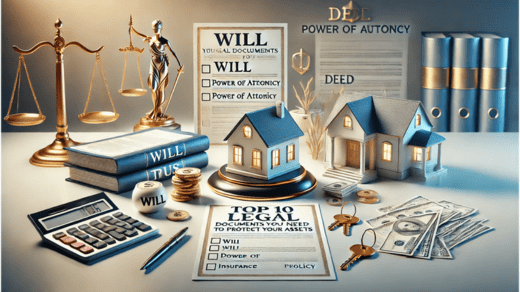
  • Top 10 Legal Documents You Need to Protect Your Assets

    Top 10 Legal Documents You Need to Protect Your Assets

    In today’s complex financial landscape, protecting your assets is crucial. Whether you’re a business owner, a homeowner, or simply someone who wants to ensure their personal wealth is safeguarded, having the right legal documents in place can make a significant difference. This article will explore the top 10 legal documents you need to protect your assets, helping you understand their importance and how they can benefit you.

    1. Will

    A will is one of the most fundamental legal documents for asset protection. It outlines how your assets should be distributed after your death and can specify guardianship for minor children. Without a will, your estate will be divided according to state laws, which might not align with your wishes. Creating a will ensures that your assets are distributed according to your preferences, providing peace of mind for you and your loved ones.

    2. Living Trust

    A living trust is a legal entity that holds your assets during your lifetime and distributes them according to your instructions upon your death. Unlike a will, a living trust helps avoid probate, the court process that can delay the distribution of your assets and incur additional costs. By placing your assets in a living trust, you can ensure a smoother transition of your estate and maintain privacy, as the trust does not become a matter of public record.

    3. Durable Power of Attorney

    A durable power of attorney (DPOA) allows you to appoint someone to manage your financial affairs if you become incapacitated. This document is crucial for asset protection because it ensures that your financial matters are handled according to your wishes, even if you are unable to make decisions for yourself. Without a DPOA, your family might need to go through a lengthy court process to gain control over your finances.

    4. Healthcare Proxy

    Similar to the durable power of attorney, a healthcare proxy (or medical power of attorney) allows you to designate someone to make healthcare decisions on your behalf if you are unable to do so. This document ensures that your medical preferences are respected and provides guidance on treatments and interventions you wish to receive. Having a healthcare proxy in place can prevent disputes among family members and ensure that your medical care aligns with your values and preferences.

    5. Living Will

    A living will is a legal document that specifies your wishes regarding medical treatments and interventions if you become terminally ill or permanently unconscious. It complements your healthcare proxy by providing specific instructions about the type of medical care you want to receive. A living will can help avoid confusion and stress for your loved ones during difficult times, ensuring that your end-of-life care aligns with your preferences.

    6. Beneficiary Designations

    Beneficiary designations are important for financial accounts such as life insurance policies, retirement accounts, and bank accounts. These designations determine who will receive these assets upon your death. Regularly reviewing and updating your beneficiary designations ensures that your assets are passed on according to your current wishes. It’s important to coordinate these designations with your overall estate plan to avoid any conflicts or unintended outcomes.

    7. Asset Protection Trust

    An asset protection trust is a specialized trust designed to shield your assets from creditors, lawsuits, or other financial threats. This type of trust is particularly useful for individuals in high-risk professions or those concerned about potential legal claims. By transferring assets into an asset protection trust, you can reduce the risk of losing them in the event of legal disputes or financial challenges.

    8. Prenuptial Agreement

    A prenuptial agreement is a legal document created before marriage that outlines how assets will be divided in the event of divorce or separation. This agreement can protect individual assets acquired before marriage and specify how future assets will be handled. Prenuptial agreements can be particularly important for individuals with significant assets or those entering second marriages, as they help clarify financial expectations and protect assets.

    9. Business Succession Plan

    For business owners, a business succession plan is essential for ensuring the smooth transition of ownership in the event of retirement, disability, or death. This plan outlines how the business will be transferred or managed, helping to avoid disruptions and maintain continuity. A well-crafted succession plan can protect the value of your business and provide clarity for your employees and stakeholders.

    10. Property Deed

    A property deed is a legal document that transfers ownership of real estate from one party to another. Ensuring that property deeds are accurately prepared and recorded is crucial for protecting your real estate assets. In cases of joint ownership, a deed can also specify how the property should be handled in the event of death or divorce. Regularly reviewing and updating property deeds can prevent disputes and ensure that your real estate assets are properly managed.

    Additional Considerations

    While these ten documents are essential for asset protection, it’s important to consider additional estate planning strategies to enhance your overall financial security:

    • Regular Updates: Regularly review and update your legal documents to reflect changes in your financial situation, family dynamics, or legal requirements. This ensures that your estate plan remains current and effective.
    • Legal Advice: Consult with an experienced estate planning attorney to ensure that your legal documents are properly drafted and executed. An attorney can provide personalized advice based on your specific needs and goals.
    • Document Storage: Safely store your legal documents in a secure location, such as a safe deposit box or a fireproof safe. Ensure that trusted family members or executors are aware of the location and can access the documents if needed.
    • Communication: Communicate your wishes and plans with your family members and loved ones. Open discussions can help prevent misunderstandings and conflicts, ensuring that your intentions are clear and respected.

    Conclusion

    Protecting your assets involves more than just financial planning; it requires careful preparation and the right legal documents. By having these top 10 legal documents in place—ranging from a will and living trust to a durable power of attorney and healthcare proxy—you can safeguard your assets, ensure your wishes are honored, and provide peace of mind for yourself and your loved ones. Consulting with a legal professional can help you navigate the complexities of asset protection and create a comprehensive plan that meets your unique needs.

  • How Intellectual Property Rights Safeguard Innovation and Creativity

    How Intellectual Property Rights Safeguard Innovation and Creativity

    In a world driven by rapid technological advancements and creative breakthroughs, safeguarding intellectual property (IP) has become essential for fostering innovation and creativity. Intellectual property rights (IPR) play a crucial role in protecting the interests of creators, inventors, and businesses by providing legal recognition and protection to their inventions, artistic works, and brands. This article explores how intellectual property rights safeguard innovation and creativity, and why they are vital for economic growth and the progress of society.

    Understanding Intellectual Property Rights

    Intellectual property rights are legal protections granted to the creators and owners of original works, inventions, and brands. These rights are designed to encourage and reward innovation by providing exclusive control over the use and commercialization of creative and intellectual endeavors. The main types of intellectual property rights include:

    1. Patents: Patents provide exclusive rights to inventors for a specified period, typically 20 years from the filing date. This protection covers new and useful inventions, including processes, machines, and compositions of matter. By securing a patent, inventors can prevent others from making, using, or selling their inventions without permission, thereby incentivizing further research and development.
    2. Copyrights: Copyrights protect original works of authorship, including literary, musical, artistic, and dramatic works. This protection typically lasts for the life of the author plus 70 years. Copyright holders have the exclusive right to reproduce, distribute, perform, and display their works. This ensures that creators can control how their works are used and benefit financially from their creations.
    3. Trademarks: Trademarks protect distinctive signs, symbols, logos, and names used to identify and distinguish products or services. Trademark protection helps businesses build brand recognition and prevent consumer confusion. It ensures that competitors cannot use similar marks that could mislead consumers or dilute the value of an established brand.
    4. Trade Secrets: Trade secrets refer to confidential business information that provides a competitive edge, such as formulas, processes, or strategies. Unlike patents, trade secrets are protected indefinitely as long as they remain confidential. Businesses must take reasonable steps to maintain the secrecy of their trade secrets to prevent unauthorized use or disclosure.

    The Role of Intellectual Property Rights in Innovation

    Intellectual property rights play a pivotal role in fostering innovation by providing several key benefits:

    1. Incentivizing Investment: IP rights encourage investment in research and development (R&D) by providing a temporary monopoly on new inventions and creative works. Investors and businesses are more likely to invest in innovative projects when they know they can recoup their investments and earn returns through exclusive rights.
    2. Promoting Competition: IP rights help level the playing field by ensuring that inventors and creators can protect their unique contributions. This fosters healthy competition by allowing new entrants to showcase their innovations without the fear of immediate imitation. As a result, businesses are motivated to continually improve and develop new products and services.
    3. Encouraging Knowledge Sharing: Patents and other IP protections often require public disclosure of the underlying technology or creative process. This transparency promotes the sharing of knowledge and accelerates technological progress by allowing others to build upon existing innovations while still respecting IP rights.
    4. Supporting Economic Growth: Intellectual property rights contribute significantly to economic growth by creating a conducive environment for innovation. The commercialization of IP assets generates revenue, creates jobs, and drives economic activity. Strong IP protection attracts both domestic and international investment, further stimulating economic development.

    Intellectual Property Rights and Creativity

    Intellectual property rights are equally crucial for protecting and nurturing creativity. Here’s how they support creative endeavors:

    1. Ensuring Fair Compensation: Copyrights and trademarks provide creators with the means to earn fair compensation for their works. Artists, writers, musicians, and designers can monetize their creations through licensing, royalties, and merchandising. This financial reward motivates them to continue producing high-quality work and exploring new creative avenues.
    2. Preventing Unauthorized Use: IP rights prevent others from using or reproducing creative works without permission. This protection helps maintain the integrity and originality of artistic creations and ensures that creators retain control over how their works are used. Unauthorized use or plagiarism can undermine the value of creative works and discourage further innovation.
    3. Fostering Artistic Freedom: By securing exclusive rights, IP protections enable creators to explore new ideas and experiment with innovative concepts without fear of immediate appropriation. This freedom encourages artists and authors to push boundaries and produce groundbreaking works that enrich culture and society.
    4. Building Brand Identity: Trademarks play a vital role in establishing and maintaining brand identity. For businesses and creative professionals, trademarks help build a recognizable and trusted brand image. This branding not only differentiates their products or services in the marketplace but also establishes a connection with consumers, enhancing loyalty and recognition.

    The Global Impact of Intellectual Property Rights

    Intellectual property rights are not limited to any single country or region. They have a global impact, influencing international trade, collaboration, and cultural exchange. Here’s how:

    1. Facilitating International Trade: IP rights harmonize international trade by providing a standardized framework for protecting inventions, creative works, and brands across borders. Treaties and agreements, such as the Agreement on Trade-Related Aspects of Intellectual Property Rights (TRIPS), establish minimum standards for IP protection and enforcement, promoting fair competition and reducing trade barriers.
    2. Encouraging Cross-Border Collaboration: IP rights enable global collaboration by allowing businesses and researchers to share and commercialize their innovations internationally. Licensing agreements and partnerships often involve cross-border IP transactions, facilitating the transfer of technology and expertise between countries.
    3. Preserving Cultural Heritage: Intellectual property rights help protect and preserve cultural heritage by safeguarding traditional knowledge, folklore, and artistic expressions. Indigenous communities and cultural organizations can use IP protections to prevent the exploitation or misappropriation of their cultural assets, ensuring their preservation for future generations.

    Challenges and Future Directions

    While intellectual property rights provide significant benefits, they also face challenges and criticisms. Issues such as patent trolls, copyright infringement, and the balance between protection and access to knowledge have sparked debates. Addressing these challenges requires ongoing reform and adaptation of IP laws to align with evolving technological advancements and societal needs.

    Future directions for intellectual property rights include enhancing digital rights management, addressing the challenges of global IP enforcement, and promoting equitable access to knowledge and innovation. Balancing the interests of creators, businesses, and the public will be crucial for ensuring that IP rights continue to support and incentivize innovation and creativity.

    Conclusion

    Intellectual property rights play a fundamental role in safeguarding innovation and creativity by providing legal protections that incentivize investment, promote competition, and encourage knowledge sharing. By ensuring fair compensation, preventing unauthorized use, and fostering artistic freedom, IP rights enable creators and businesses to thrive in a competitive landscape. As the global economy and technological landscape continue to evolve, adapting IP laws and addressing emerging challenges will be essential for maintaining a dynamic and innovative environment. Embracing and understanding intellectual property rights is crucial for anyone involved in creative or inventive endeavors, as they form the bedrock of progress and success in the modern world.